How to clean the Always Pan: Our Place's own instructions, including the baking soda method for burnt-on food
The short version. Let it cool. Wash by hand with a soft sponge and mild soap, rinse, dry. For burnt-on food, boil water in the pan with a few tablespoons of baking soda; if that is not enough, a paste of baking soda and white vinegar left on for 15 to 30 minutes, then a gentle scrub and a rinse. Never the dishwasher, never steel wool, never soaking, never a hot pan into cold water. Everything on this page is Our Place's own wording, quoted, with the source named — not kitchen folklore.
We earn a commission on purchases through the links here. Nothing on this page asks you to buy anything.
Every day
1. Cool first. “After cooking, allow the pan to cool down before cleaning.” The product page puts it as “let the cookware completely cool before cleaning, and make sure it is dry before cooking again.” The care guide also warns against the opposite — a hot pan straight into cold water.
2. Soft sponge, mild soap. “Once the pan is cool, gently scrub the surface with a non-abrasive sponge and mild dish soap.” The product page: “No harsh scrubbing or abrasives needed with our high-performance nonstick coating.”
3. Rinse. “Rinse the pan thoroughly to remove any soapy residue.”
4. Dry. “Towel dry the pan or let it air dry completely before storing away.” Then: “Store in a dry location to prevent moisture damage” and “stack carefully with protective padding between pieces.”
Never the dishwasher, never soaking. “Hand wash only, not dishwasher safe.” “Do not fully soak or submerge the pan or pot in water.” Our Place's care guide lists nonstick pans among the kitchen tools “that should never go in the dishwasher”.
Steps 1–4 are from Our Place's care guide (Patty Lee, 6 April 2024); the product-page lines are from the Always Pan listing. Both read 16 October 2026.
Burnt-on food and stains
Do not scrub it off. “Don't be tempted to scrub off those stuck-on bits with a scouring pad.” And: “Skip the steel wool and other abrasive cleaners and simply use a soft sponge.”
Boil it off. “Deglaze the pan by boiling water with a few tablespoons of baking soda.” Our Place gives no quantity of water and no timing; that is the whole instruction.
If that is not enough, the paste. “If that's not quite enough, form a paste using the baking soda and a bit of white vinegar.” “Apply to the affected areas and let sit for 15 to 30 minutes before scrubbing gently.” Then “rinse the pan thoroughly with warm water to remove the baking soda.”
Exterior drips and stains. “The baking soda paste also works to remove drips and stains on the exterior.” Our Place adds the caveat that matters for the light colours: “Remember that the cookware will naturally patina as you use it.”
Bar Keepers Friend, bleach, oven cleaner. Our Place mentions none of them, for or against. Its rules are “harsh detergents and high temperatures will shorten the lifespan of the nonstick coating” and no abrasives. A powder cleanser is an abrasive. We would not use one on a ceramic coating, and the three-year warranty is conditional on following the care instructions.
Why it sticks, and the oil and heat rules
Sticking is a film, says Our Place. “Sticking usually happens because a thin film has formed over the coating.” The care guide offers no restoration method beyond cleaning; the boiling-water and paste steps above are the closest thing to one it publishes.
Oil: yes, but not from a can. “Never heat an empty pan. Use high-smoke-point oil (like olive, avocado, or grapeseed) with the nonstick coating.” “Avoid aerosol sprays to protect the nonstick coating.” The care guide's reason: the droplets “burn because they're so small and block the nonstick from working properly.”
Heat: low to medium. “Use low-to-medium heat for optimal results.” The care guide: “stick to low- to medium-heat settings and keep them off high heat.”
Utensils: not metal. “Use wooden or silicone utensils to protect the ceramic nonstick coating. Do not use metal utensils.”
Handles. “Use caution! Always use heat protection when handling the short and long handles and knobs.” Not a cleaning rule, but it is on the same card.
Ceramic, cast iron, titanium: three different rulebooks
Ceramic and cast iron instructions quoted from each product page; the burnt-on method from Our Place's care guide of 6 April 2024; titanium permissions from its product pages. All read 16 October 2026. The cast iron review has that pan's full specification.
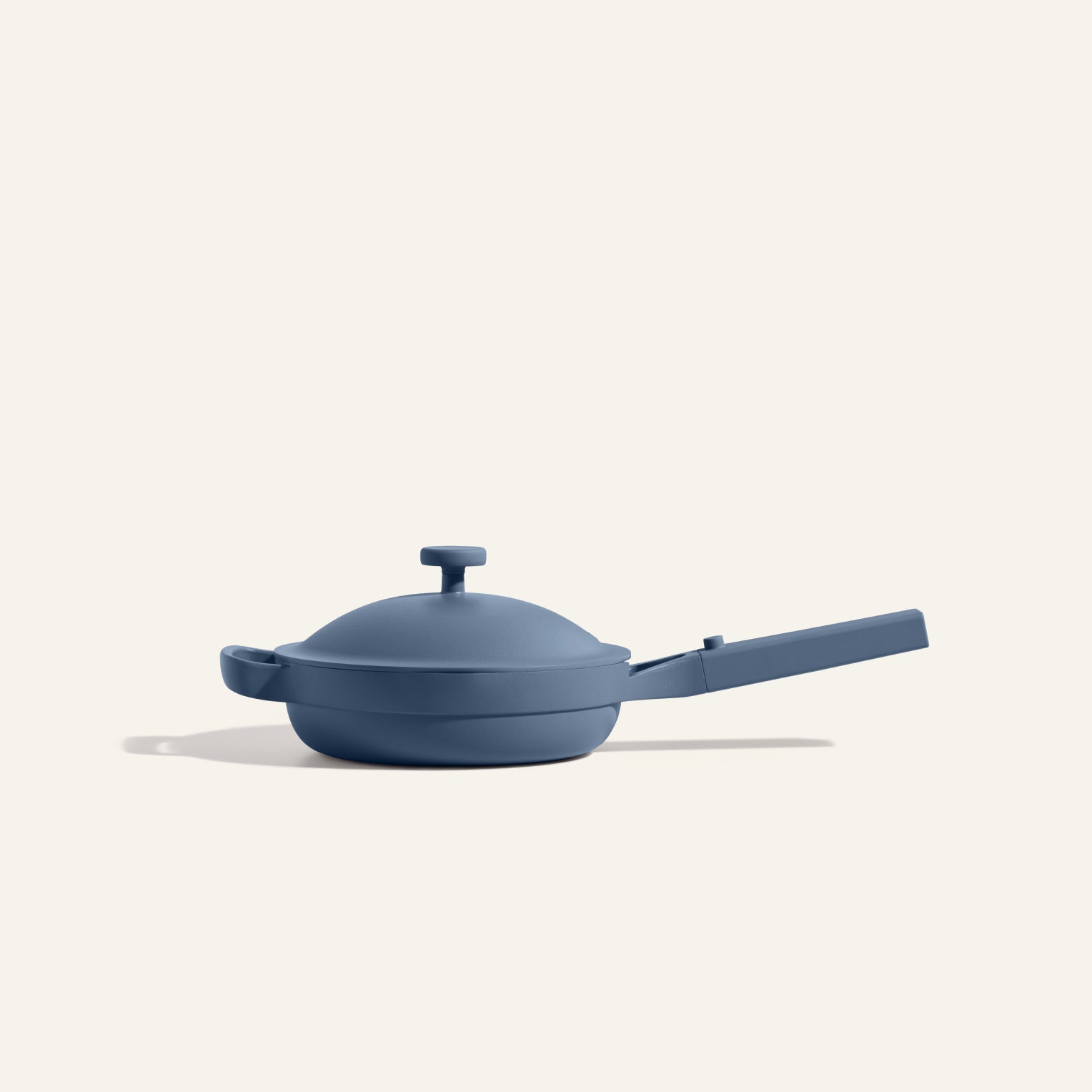
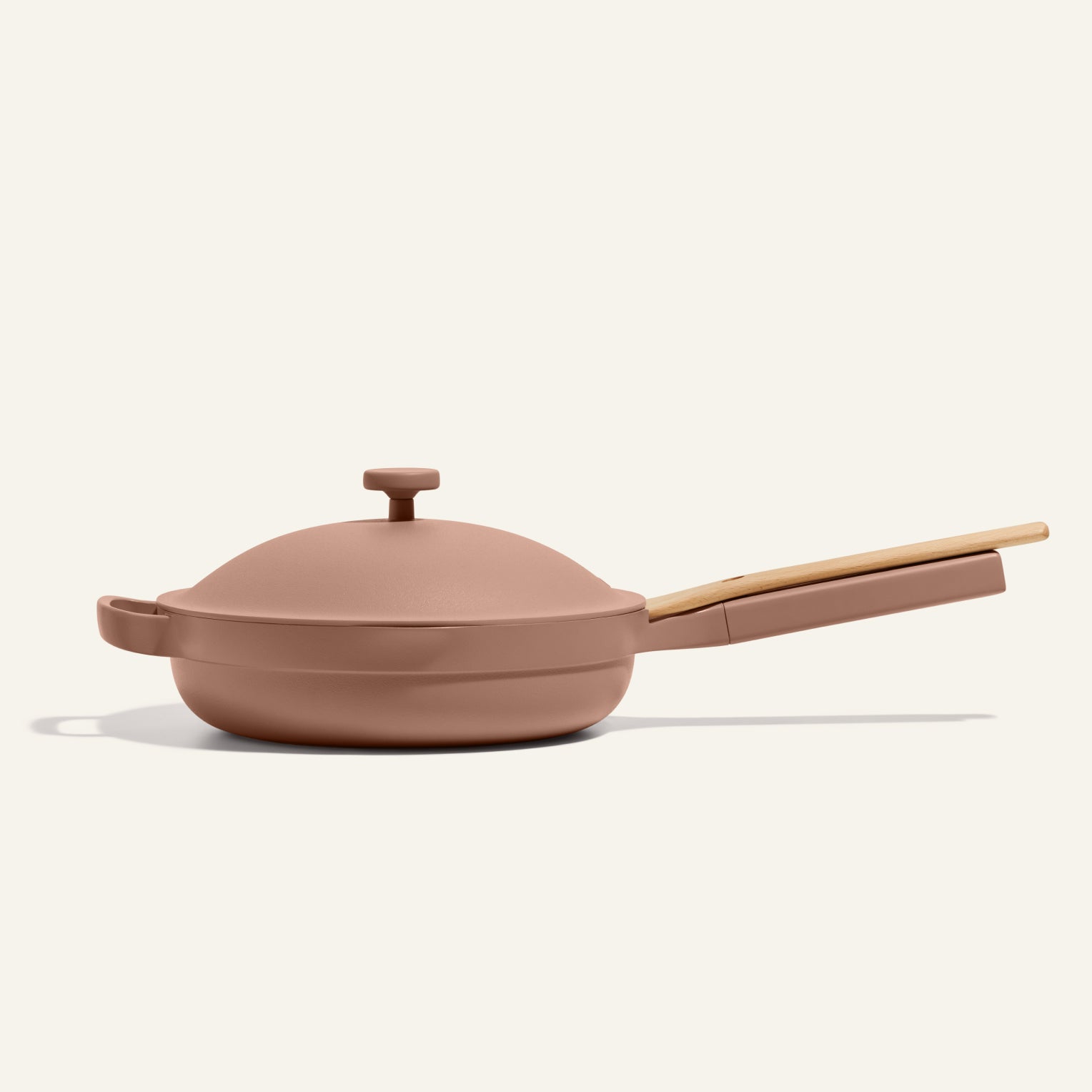
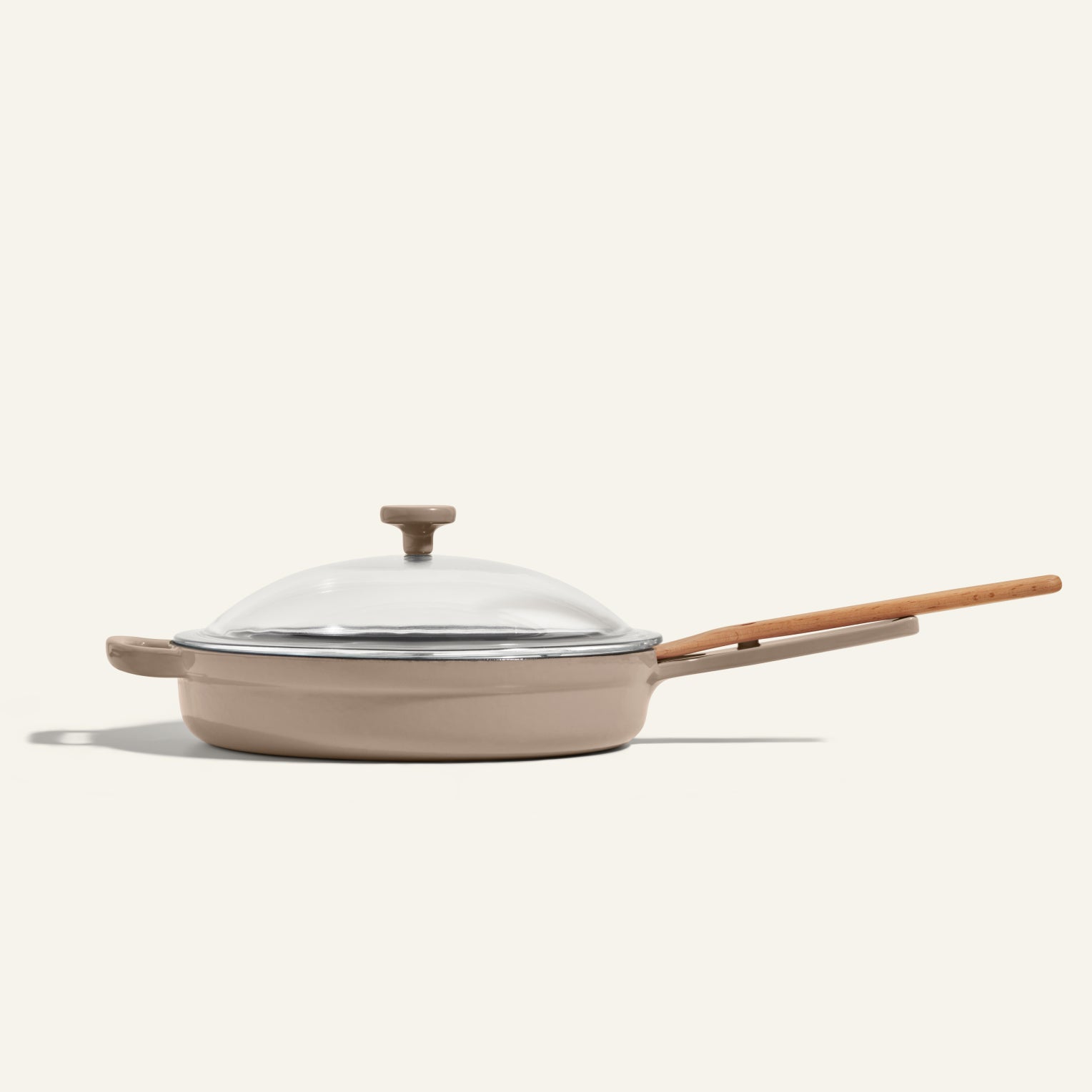
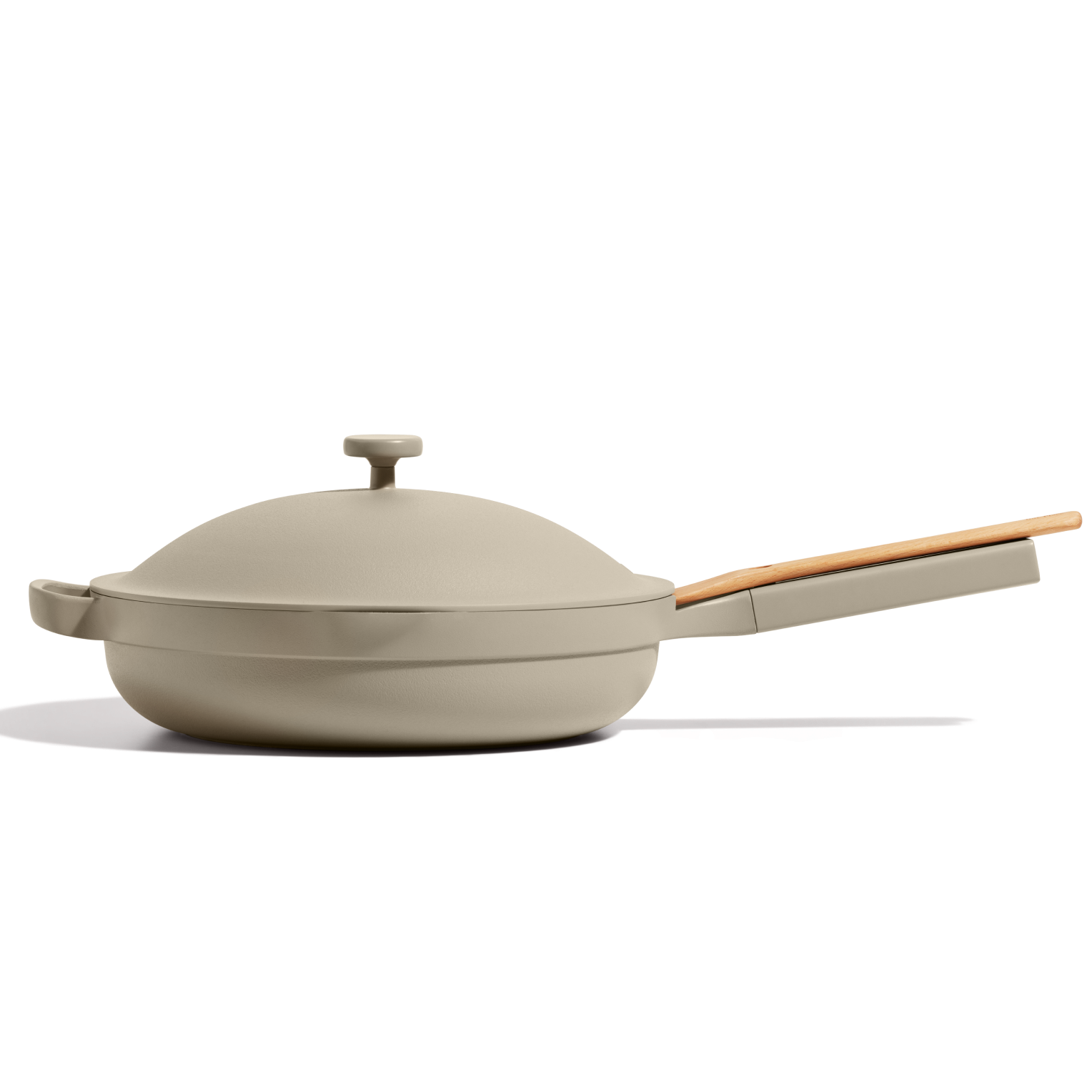
The pans these rules apply to
Prices read from Our Place's product data on the date on each card. The three ceramic sizes share one rulebook; the cast iron has its own, below.
The whole method, in order
For the ceramic pan. Six lines; nothing on this card is ours.
The questions people actually ask
Can the Always Pan go in the dishwasher?
No: “hand wash only, not dishwasher safe.” The cast iron version is “not recommended” for dishwashers either. The titanium Always Pan Pro is the one Our Place rates dishwasher safe.
How do I get burnt food off the Always Pan?
Boil water in it with a few tablespoons of baking soda. If residue remains, a paste of baking soda and white vinegar on the spot for 15 to 30 minutes, then a gentle scrub and a warm rinse. Those are Our Place's steps, quoted above.
How do I clean stains off the outside?
The same baking soda paste: Our Place says it “also works to remove drips and stains on the exterior”, and that the cookware “will naturally patina” with use.
Can I use Bar Keepers Friend on the Always Pan?
Our Place does not mention it. Its rule is no abrasives and no harsh detergents, because they “will shorten the lifespan of the nonstick coating”. A powder cleanser is an abrasive; we would not.
Why is my Always Pan sticking?
Our Place's care guide: “Sticking usually happens because a thin film has formed over the coating.” It publishes no restoration method. Clean it with the baking soda steps, go back to low-to-medium heat and a non-aerosol oil, and if it still sticks, the three-year warranty is the next conversation.
How do I clean the Cast Iron Always Pan?
Hand wash once fully cooled; deep clean with boiling water and a sprinkle of baking soda; no scours or abrasives; high-smoke-point oils. All from the cast iron product page.
Does the warranty depend on this?
Yes. Our Place's three-year limited warranty on the ceramic pan applies “if the care instructions are followed”. The terms are on Our Place warranty and returns.
Where do these instructions come from?
The Always Pan and Cast Iron Always Pan product pages on fromourplace.com, and Our Place's own care guide “How to Clean Nonstick Pans” by Patty Lee, 6 April 2024. All read 16 October 2026. How we check these pages.
1919 Cookware is an independent guide to Our Place cookware, written to help you work out what to buy. We earn a commission when you buy through our links, at no extra cost to you, and it does not decide our verdicts — where a rival or a cheaper model is the better buy, we say so. Prices and specifications are read from each manufacturer's own published product data rather than from long-term kitchen testing, and the page below explains what that does and does not settle. We do not accept press samples and no brand reviews our pages before publication. Our Place prices and specifications last verified 16 October 2026; competitor prices 25 August 2026.
How we check these pages